Best Pressure Washers in Australia 2025
Quick Summary: The best pressure washers in Australia combine reliability, power, and value. For most homeowners, electric models like the Karcher K5 Premium ($449) offer excellent performance for driveways and decks, while the Simpson MS60763-S ($399) leads the petrol category for heavy-duty work. Budget-conscious buyers should consider the Ryobi RPW-1800 ($199) for light cleaning tasks.
Choosing the right pressure washer can transform your weekend cleaning routine from a tedious chore into a satisfying power-cleaning session. With Australian conditions ranging from dusty outback properties to coastal salt spray, finding equipment that handles our unique challenges is crucial.
Top 5 Pressure Washers in Australia 2025
After testing dozens of models and analysing thousands of user reviews, these five pressure washers represent the best value and performance for Australian homeowners.
Best Overall: Karcher K5 Premium
The Karcher K5 Premium pressure washer sits at the sweet spot of power, reliability, and features. Priced around $449 at Bunnings, this electric model delivers 2000 PSI with a 7.5-litre per minute flow rate.
Key features include the patented Vario Power spray lance that adjusts pressure with a simple twist, making it perfect for switching between delicate car washing and aggressive concrete cleaning. The full steel pump and aluminium pistons ensure longevity in Australian conditions.
The K5 Premium includes a 8-metre high-pressure hose, detergent tank, and multiple nozzle attachments. Users consistently praise its ability to strip years of grime from driveways while remaining gentle enough for timber decking when properly adjusted.
Best Budget Option
The Ryobi RPW-1800 pressure washer offers remarkable value at $199 from Bunnings. While it lacks the raw power of premium models, its 1800 PSI output handles most residential cleaning tasks effectively.
This electric unit includes a 6-metre hose, adjustable pressure nozzle, and detergent injection system. The lightweight design makes it easy to manoeuvre around the property, though the shorter hose means more frequent repositioning.
Perfect for apartment balconies, small patios, and regular car washing. The RPW-1800 proves that you don't need to spend $400+ for effective pressure cleaning.
Best for Heavy-Duty Jobs
For serious cleaning power, the Simpson MS60763-S petrol pressure washer delivers professional-grade performance at $399. This beast produces 2800 PSI with an impressive 9.5 litres per minute flow rate.
The Honda GCV160 engine provides reliable starting and consistent power, while the axial cam pump handles continuous operation without overheating. The 10-metre hose and professional-grade accessories tackle everything from large driveways to multi-storey building exteriors.
Commercial landscapers and property maintenance crews frequently choose this model for its durability and power output.
Electric vs Petrol Pressure Washers
Understanding the fundamental differences between electric and petrol pressure washers helps narrow your choice based on specific needs and circumstances.
Electric Pressure Washers Pros and Cons
Electric models dominate residential sales for good reasons. They start instantly with the push of a button, operate quietly enough for suburban use, and require minimal maintenance beyond occasional cleaning.
The main advantages include lower purchase prices (typically $150-$500), zero emissions for garage or covered area use, and consistent power delivery. Most electric units produce between 1400-2300 PSI, suitable for 90% of home cleaning tasks.
Limitations centre around mobility and power. You're tethered to a power point, though 15-metre extension leads expand reach significantly. Maximum PSI rarely exceeds 2300, which may struggle with heavily stained concrete or industrial cleaning.
Petrol Pressure Washers Pros and Cons
Petrol units excel in power and portability. Without electrical constraints, you can clean anywhere on your property, making them ideal for large rural blocks or areas without convenient power access.
Power output typically ranges from 2500-4000+ PSI, with commercial models reaching even higher. This extra force tackles the toughest cleaning jobs, including paint stripping, heavy mould removal, and industrial equipment cleaning.
The trade-offs include higher purchase costs ($350-$1200+), regular maintenance requirements (oil changes, spark plug replacement), fuel costs, and noise restrictions in suburban areas. Starting can be challenging in cold weather, and emissions prevent indoor use.
Understanding PSI and Water Flow Ratings
PSI (pounds per square inch) measures pressure intensity, while flow rate (litres per minute) determines cleaning efficiency. Both factors work together to create effective cleaning power.
For reference, garden hoses typically produce 30-50 PSI, while pressure washers start around 1400 PSI for light-duty models. The sweet spot for most Australian homeowners sits between 1800-2500 PSI, providing enough power for effective cleaning without risking surface damage.
Water flow becomes equally important for rinsing away loosened dirt and debris. Higher flow rates (8+ litres per minute) clean faster by washing away grime as the pressure breaks it free from surfaces.
The cleaning units (PSI × flow rate ÷ 1000) provide a useful comparison metric. A 2000 PSI washer flowing 7 litres per minute produces 14 cleaning units, while a 1800 PSI model with 9 litres per minute achieves 16.2 cleaning units despite lower pressure.
Best Pressure Washers for Specific Jobs
Different cleaning tasks require different approaches and power levels. Matching your pressure washer to intended use prevents both inadequate cleaning and surface damage.
Driveways and Concrete
Concrete surfaces handle high pressure well, making them ideal for powerful cleaning. Should I buy electric or petrol pressure washer for driveway cleaning? For most residential driveways, a quality electric model delivering 2000+ PSI provides excellent results.
The Karcher K5 Premium excels here, combining sufficient power with precision control. Use the high-pressure setting for heavily stained areas, then reduce pressure for final rinsing. Always maintain consistent movement to avoid creating pressure lines in the concrete.
For large driveways or commercial applications, petrol models like the Simpson MS60763-S justify their higher cost through superior power and unlimited mobility.
Timber Decking and Fencing
What PSI pressure washer do I need for cleaning my deck? Timber requires careful pressure management to avoid damage. Start with 1200-1500 PSI and increase gradually if needed.
Electric models with adjustable pressure work best, allowing fine-tuned control. Always spray along the grain direction and maintain consistent distance to prevent gouging or splintering.
The Ryobi RPW-1800 handles most timber cleaning effectively at its lower pressure settings, while the Karcher K5's Vario Power lance provides excellent pressure adjustment for different timber densities.
Car and Vehicle Washing
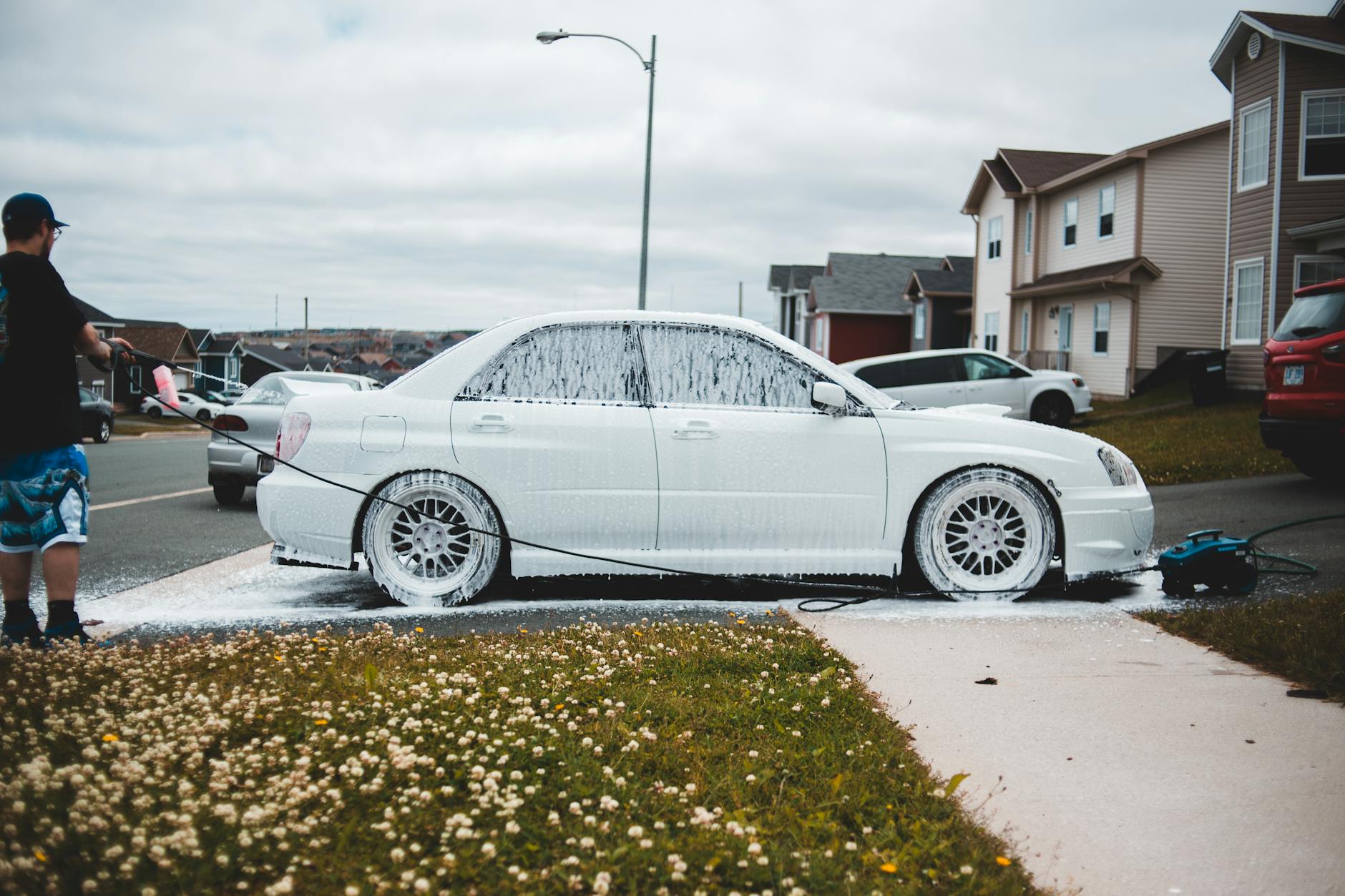
Vehicle surfaces demand gentle treatment to protect paint and trim. Use wide-angle nozzles and maintain 30-50cm distance from painted surfaces.
Start with detergent application at low pressure, then rinse with moderate pressure (1000-1400 PSI). The foam cannon attachment available for most models creates thick, clinging suds that lift dirt effectively.
Most electric pressure washers handle car washing perfectly, with the budget Ryobi RPW-1800 providing more than enough power for regular vehicle maintenance.
Where to Buy Pressure Washers in Australia
Finding the right model at the best price requires knowing where to shop and what to expect from different retailers.
Bunnings Warehouse Options
Which pressure washer brand is most reliable at Bunnings Warehouse? Bunnings stocks quality brands including Karcher, Ryobi, and Gerni, with Karcher leading reliability surveys among Australian users.
Bunnings offers competitive pricing, easy returns, and local warranty support. Their range covers budget models from $150 to professional units exceeding $800. Staff can provide practical advice based on local customer feedback.
The advantage of buying from Bunnings includes immediate availability, hands-on evaluation before purchase, and simple warranty claims through their extensive store network.
Online Retailers
Online shopping expands choice and often provides better pricing, particularly for premium models. Amazon AU stocks international brands with competitive shipping, while specialist retailers like Total Tools offer professional-grade equipment.
Compare prices across multiple platforms, as significant variations exist. Factor in shipping costs and delivery timeframes when comparing online versus retail pricing.
Read user reviews carefully, focusing on long-term reliability rather than initial impressions. Australian-specific reviews provide valuable insights into performance under local conditions.
Maintenance Tips for Australian Conditions
Regular maintenance extends pressure washer life and ensures consistent performance in Australia's demanding environment.
After each use, flush the system with clean water to remove detergent residue and prevent internal corrosion. This step becomes critical in coastal areas where salt spray accelerates metal deterioration.
Store units in dry locations protected from temperature extremes. Australian heat can damage seals and hoses, while cold snaps affect pump performance. Drain all water from the system before storage to prevent freeze damage in cooler regions.
For petrol models, use quality fuel and change oil according to manufacturer specifications. Australian dust requires more frequent air filter cleaning than in other climates.
Inspect hoses regularly for wear, particularly where they connect to the unit and spray gun. Replace damaged hoses immediately, as high-pressure failures create safety hazards.
How much should I spend on a pressure washer for home use? Budget $200-$450 for quality electric models that handle typical residential cleaning. Invest in premium features like adjustable pressure and quality accessories that enhance versatility and results.
Bottom Line
The best pressure washers in Australia balance power, reliability, and value for money. Electric models like the Karcher K5 Premium deliver excellent performance for most homeowners, while budget options like the Ryobi RPW-1800 handle basic cleaning tasks effectively.
For heavy-duty applications or properties without convenient power access, petrol models like the Simpson MS60763-S provide superior power and mobility. Consider your specific cleaning needs, property size, and budget when making your final decision.
Quality pressure washers transform property maintenance from a chore into an efficient, satisfying process. Choose wisely, maintain properly, and enjoy years of effective cleaning power.


