Induction vs Gas Cooktops: Complete Guide for Australian Kitchens
Quick summary: Induction cooktops heat faster, are safer and cost less to run per year, but may need an electrical upgrade and only work with magnetic cookware. Gas cooktops offer familiar cooking control and work during blackouts, but cost more to run in most states and add heat to your kitchen. Your existing wiring, cookware collection and budget will usually decide the winner.
Replacing a cooktop is one of those renovation decisions that feels simple until you actually start comparing options. Induction vs gas cooktop debates have become common in Australian kitchens as electricity prices shift, gas connection costs rise, and induction technology matures.
This guide breaks down the real differences—cost, performance, installation and safety—so you can make a decision based on your actual kitchen, not just marketing claims.
Induction vs Gas Cooktops: The Key Differences
Gas cooktops burn natural gas or LPG to produce a direct flame under your cookware. Induction cooktops use electromagnetic energy to heat the pan itself, while the glass surface stays relatively cool to the touch.
Both are "cooktops" in the everyday sense, but the technology, running costs and installation needs are quite different.
How Each Technology Works
A gas cooktop ignites fuel through a burner, and the flame directly heats your pot or pan. You get instant visual feedback—turn the dial, see the flame respond.
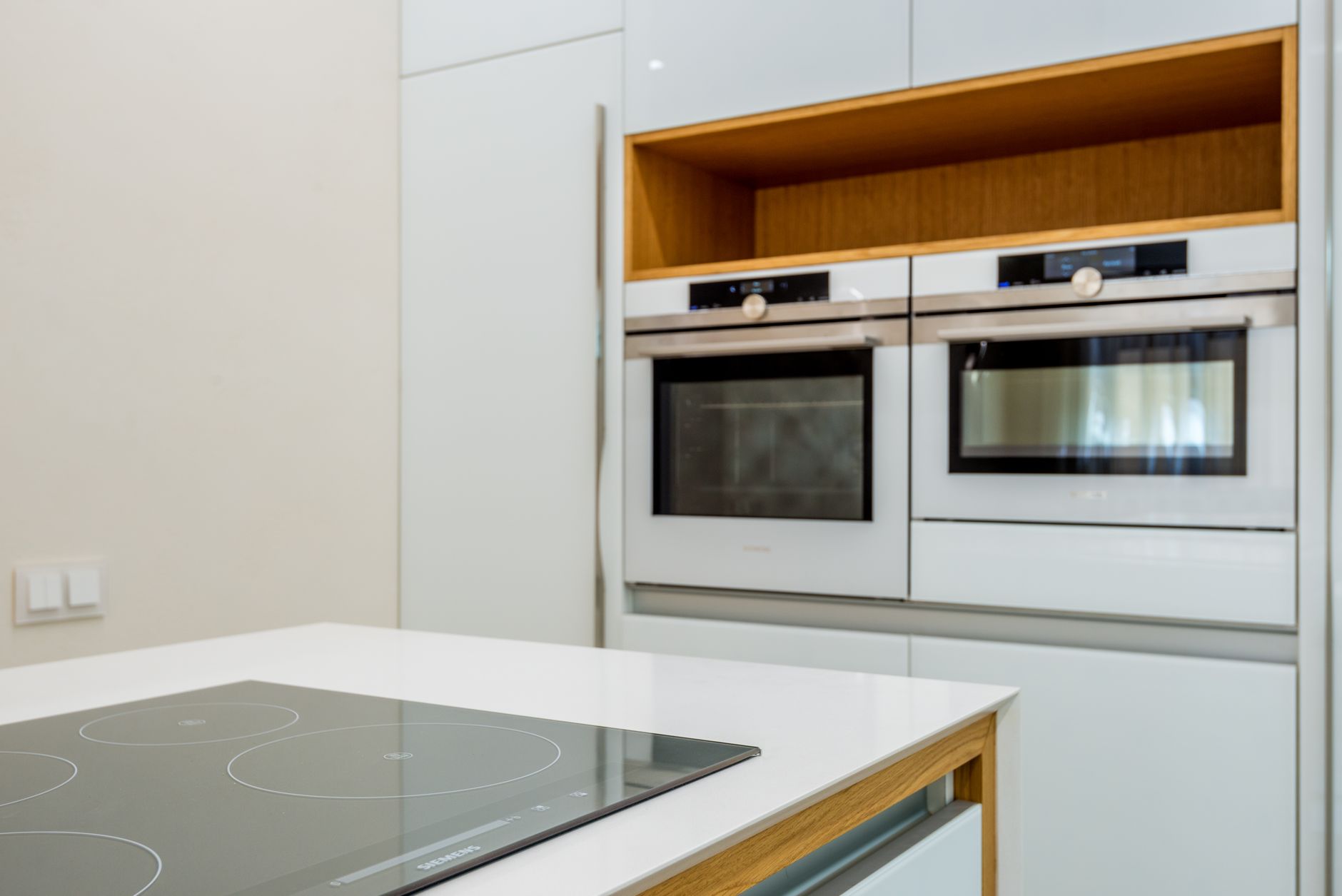
An induction cooktop uses a coil beneath the ceramic glass surface to generate a magnetic field. This field only creates heat when it interacts with a ferrous (magnetic) pan, which means the cooktop surface itself never gets dangerously hot the way a gas flame or old-school electric element does.
The Bosch PXY875D67A induction cooktop is a popular example of this technology in mid-to-upper range Australian kitchens, priced around $2,199.
Cooking Performance Compared
Performance is where opinions get heated (pun intended). Professional chefs have traditionally preferred gas for its visual flame control, but induction has closed the gap significantly in the last five years.
Heat Control and Speed
Induction wins on raw speed. Boiling a litre of water on a quality induction cooktop typically takes 3–4 minutes, compared to 5–8 minutes on gas. The heat also responds almost instantly when you adjust the setting—there's virtually no lag.
Gas still offers a tactile, visual form of control that many home cooks find intuitive, especially for tasks like flambéing or char-grilling capsicums directly over the flame, which simply isn't possible on induction.
Cookware Compatibility
Can I use my existing pots and pans on an induction cooktop?
Only if they're magnetic. Cast iron, enamelled cast iron, and most stainless steel pots and pans work fine. Aluminium, copper-bottomed, and some glass or ceramic cookware won't work unless it has a magnetic base plate.
A quick test: if a fridge magnet sticks firmly to the base of your pot, it'll work on induction. If not, you'll need to replace it.
Budget for cookware if you're switching. A decent induction-ready set, like the Scanpan Impact 5-piece cookware set , runs around $399–$549 and covers most household needs.
Running Costs in Australia
This is usually the deciding factor for renovators on a budget.
Is Induction Cooktop Cheaper to Run Than Gas in Australia?
In most cases, yes. Induction cooktops convert around 85–90% of energy into heat, compared to roughly 40% for gas burners, where much of the heat escapes around the sides of the pot. That efficiency gap means induction uses less energy overall to do the same cooking job.
However, "cheaper to run" also depends on your electricity tariff versus your gas tariff, and whether you're already paying a daily gas supply charge regardless of usage.
Energy Price Comparison by State
| State | Avg Electricity (c/kWh) | Avg Gas (c/MJ) | Daily Gas Supply Charge |
|---|---|---|---|
| NSW | ~28–33c | ~2.5–3c | ~$0.90–$1.10 |
| VIC | ~25–30c | ~2–2.5c | ~$0.80–$1.00 |
| QLD | ~26–32c | ~3–3.5c | ~$0.90–$1.20 |
| SA | ~35–40c | ~3–3.5c | ~$0.95–$1.15 |
| WA | ~28–30c | ~2.5–3c | ~$0.85–$1.05 |
Figures are indicative averages and vary by retailer and plan—check your own bill for accurate rates.
The daily gas supply charge is often overlooked. If cooking is the only gas appliance left in your home, you could be paying $300–$400 a year just to keep the gas connected, regardless of how much you cook.
Long-Term Savings Estimate
For an average household cooking daily, induction typically saves $60–$150 per year on cooktop running costs alone. If removing gas altogether lets you disconnect the gas supply entirely, total annual savings can climb to $350–$500 once you factor in the supply charge.
Over a 10-year kitchen lifespan, that's a meaningful chunk of change—potentially $1,000 to $5,000 depending on your situation.
Installation Requirements
This is where the induction vs gas cooktop decision often gets complicated for existing homes.
Do I Need to Rewire My Kitchen for an Induction Cooktop?
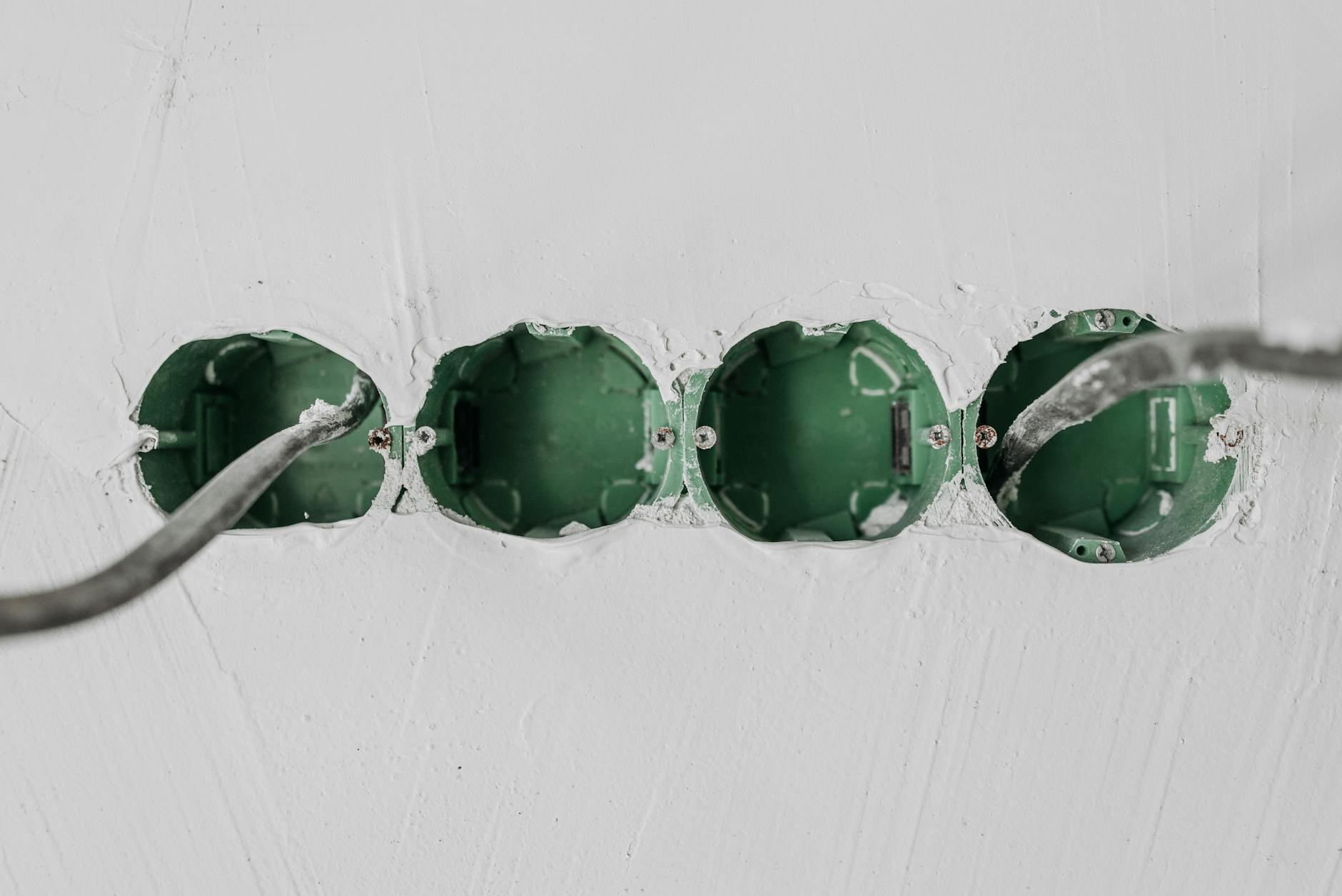
Possibly. Induction cooktops need a dedicated 32-amp or 40-amp circuit, depending on the model and cooking zones. Many older Australian kitchens only have a standard 15-amp or 20-amp circuit for the cooktop, which won't be sufficient.
A licensed electrician will need to run a new circuit from your switchboard, which typically costs $300–$800 depending on cable run length and switchboard capacity. If your switchboard also needs upgrading to handle the additional load, add another $500–$1,500.
Electrical Wiring and Power Needs
Most full-size 4-zone induction cooktops draw between 7kW and 11kW. Compact 2-zone units draw less, around 3.5–5kW, and may run on existing circuits in some cases—but always get this confirmed by a licensed electrician before purchase.
Gas Line Considerations
If you're going the other direction—installing gas where there wasn't one before—you'll need a licensed gasfitter to run a new gas line, which typically costs $500–$1,500 depending on distance from the meter and whether you're using natural gas or bottled LPG.
How much does it cost to convert from gas to induction cooktop?
Budget for the full picture: cooktop unit ($800–$2,500), electrician for new circuit ($300–$800), possible switchboard upgrade ($500–$1,500), removal and capping of the old gas line ($150–$400), and new induction-compatible cookware if needed ($300–$600). All up, most homeowners spend $2,000–$5,000 for a complete conversion.
Safety and Maintenance
Induction cooktops have a clear safety edge. The surface stays cool except directly under the pan, which matters a lot in households with kids or pets. Most models also include auto shut-off if a pan boils dry or is removed.
Is induction cooktop safe to use during a power outage?
No—induction cooktops require electricity to function, so they won't work during a blackout. Gas cooktops with a manual ignition (using a match or lighter) will still work even without power, which is worth considering if you live in a bushfire-prone or storm-affected area with frequent outages.
Maintenance-wise, induction glass surfaces are easy to wipe clean since spills don't burn onto grates or burner caps. Gas cooktops need regular removal and cleaning of burner caps, trivets and drip trays, and gas jets can occasionally need clearing if blocked.
Which Cooktop Suits Your Kitchen?
If you're doing a full renovation with the switchboard exposed anyway, induction is usually the easier and cheaper long-term call—the extra electrical work is a smaller add-on cost.
If you're doing a straight cooktop swap without touching walls or wiring, gas may work out cheaper upfront, especially if your existing gas line and circuit are already in place.
Households in bushfire zones, rural properties with unreliable grid power, or keen wok cooks who rely on high, direct flame heat often still lean toward gas. Households focused on running costs, safety with children, or a fully electric/solar setup usually lean toward induction.
Frequently Asked Questions
Is induction cooktop cheaper to run than gas in Australia? Generally yes, thanks to higher energy efficiency, though the exact saving depends on your state's energy prices and whether you can drop the gas connection entirely.
Do I need to rewire my kitchen for an induction cooktop? Often yes, particularly in older homes—a dedicated circuit is required, and a licensed electrician should assess your switchboard capacity first.
Can I use my existing pots and pans on an induction cooktop? Only if they're magnetic. Test with a fridge magnet; if it sticks to the base, the pan will work.
How much does it cost to convert from gas to induction cooktop? Expect $2,000–$5,000 all-in for the cooktop, electrical work, gas line capping and any new cookware.
Is induction cooktop safe to use during a power outage? No, it requires mains power to operate, unlike a gas cooktop with manual ignition.
Bottom Line
Both induction and gas cooktops can serve an Australian kitchen well—the right choice comes down to your existing setup, budget for electrical work, and how you actually cook.
If you're renovating from the studs up, induction's running cost savings and safety benefits make it the smarter long-term investment for most households. If you're on a tight budget with existing gas infrastructure already in place, sticking with gas—or upgrading to a more efficient gas cooktop—remains a perfectly reasonable choice.
Whichever way you go, get a licensed electrician or gasfitter to quote the installation before you commit to a cooktop, so there are no surprise costs once the old unit is out.